
Trade Dress Protection for Fashion Designs, Explained
Part 1 of the “Dressed to Protect” series on IP for fashion designs
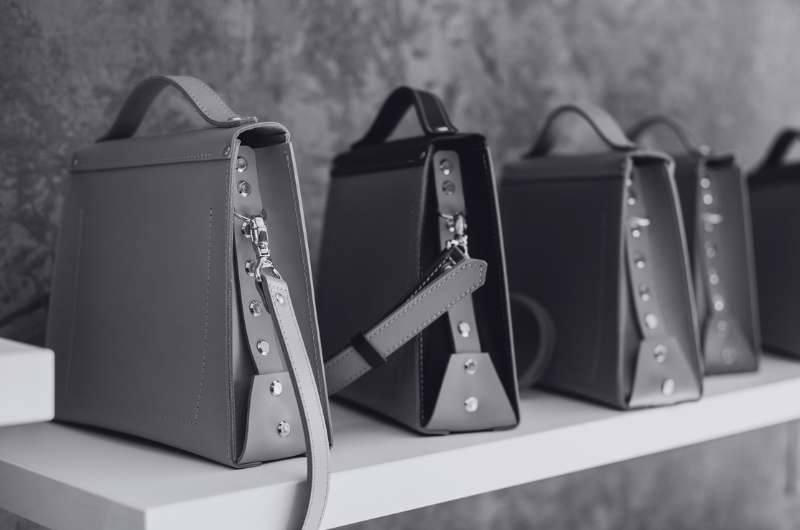
No logos. No labels. And you still know.
Quick! Picture a red-soled stiletto.
You didn’t need a logo or a brand name. You didn’t need me to say “Christian Louboutin.” You just saw it in your head and knew.
That instant recognition is the entire point of trade dress. It’s one of the most powerful intellectual property tools available to fashion designers, yet most of them have never heard the term. They’ve seen it in action their whole careers, but they didn’t know it had a name.
So… let’s fix that!
What Trade Dress Actually Is
Trade dress is a category of trademark protection. But instead of protecting a word, a logo, or a slogan, it protects the overall visual appearance of a product or its packaging. The shape of a handbag. The hardware configuration on a clasp. A signature color placement. The distinctive look that makes consumers associate a product with a specific source before they ever see a label.
The legal definition comes from the Lanham Act (the same federal statute that governs trademarks), and courts have described trade dress as the “total image and overall appearance” of a product, including features such as shape, color, texture, and graphics. If you’ve ever looked at a product and immediately thought, "Oh, that’s [Brand X]” based purely on how it looked, you’ve experienced trade dress doing its job.
However, trade dress protection in fashion isn’t automatic. It’s earned. And the road to earning it has some very specific legal potholes.
The Two Things You Must Prove (and the One Thing That Can Kill Your Claim)
To get trade dress protection for a fashion design, you generally need to establish two things:
Distinctiveness. This is where the Supreme Court drew a critical line. In Wal-Mart Stores, Inc. v. Samara Brothers (2000), the Court held that product design trade dress (as opposed to product packaging) can never be “inherently distinctive.” Product design always requires a showing of secondary meaning. That means consumers must have come to associate your particular design with you as the source. Not just “oh, that’s a nice bag.” It has to be “oh, that’s a Birkin!”
This is a high bar. And it takes time. You build secondary meaning through years of consistent use, marketing, media exposure, sales, and consumer recognition. It’s not something you can generally shortcut by filing some papers. The market has to learn your design first.
Non-functionality. Your trade dress can’t be functional. If the design feature you’re trying to protect serves a useful purpose (it makes the product work better, reduces manufacturing costs, or is essential to how the item performs), it’s not eligible for trade dress protection. The law doesn’t allow anyone to monopolize a functional feature through a trademark. That’s for patents.
This is the requirement that kills more fashion trade dress claims than any other. Fashion is functional. Clothes keep you warm. Shoes protect your feet. Zippers close things. Pockets hold things. The question is always whether the specific design element you’re claiming is decorative and source-identifying or whether it’s doing something useful that competitors need to be able to do as well.
A lacquered red sole? Decorative. The particular shape of a turn-lock clasp on a handbag? Potentially decorative if consumers associate it with a single brand. A pocket placed on the left side of a jacket? Functional. You can’t own that.
The Red Sole: A Case Study in Getting It Right
The Louboutin story is the best classroom example of trade dress in fashion because it shows both its power and its limits.
Christian Louboutin began painting the soles of his women’s shoes red in 1992. He built a brand around it for nearly two decades. The red sole became the identifier. You saw it from a distance, across a restaurant, in a celebrity photo, and you knew. Louboutin obtained a federal trademark registration for the red outsole in 2008.
Then Yves Saint Laurent released a monochrome red shoe. Red upper, red sole, red everything. Louboutin sued.
The district court denied Louboutin’s preliminary injunction on the basis that single-color marks in fashion are inherently “functional,” and that any such registered trademark (including Louboutin’s red sole registration) would likely be held invalid. In other words, the court wasn’t just saying Louboutin lost on the facts. It was saying no one should be able to claim trademark rights in a single color in the fashion industry.
Louboutin appealed, arguing that the district court failed to apply existing Supreme Court precedent. Specifically, the Supreme Court’s 1995 case Qualitex Co. v. Jacobson Products Co. was directly on point, even though it concerned dry-cleaning press pads rather than stilettos. In Qualitex, the Supreme Court held that a color can function as a trademark so long as it has acquired secondary meaning (i.e., the trademark holder can show that consumers identify the color with a single source).
The Second Circuit agreed with Louboutin on that point. Color can be a trademark. The district court got it wrong by applying a blanket rule that it can’t be. The appellate court found that Louboutin’s red sole had acquired secondary meaning, and consumers did associate the red sole with Louboutin.
But (and this is the part that matters) the Second Circuit also limited the trademark’s scope. It held that Louboutin’s red sole mark provides protection only when the red sole contrasts with the shoe's upper. YSL’s monochrome red shoe was not infringing because the entire shoe was red. There was no contrast. No visual sign that said “Louboutin.” Both sides got what they wanted (in a way). Louboutin kept its trademark (with a limitation). YSL was able to keep selling its red shoes.
The takeaway: Louboutin didn’t own the color red. The brand owned the specific commercial impression created by a red sole against a differently colored shoe.
See how specific that is?
Trade dress doesn’t give you a monopoly on a color. It gives you a claim to the way you’ve used it, consistently, for so long that nobody else can falsely claim they got there first.
The Birkin: How a Shape Becomes a Trademark
If the red sole is a masterclass in color as trade dress, the Hermès Birkin bag is a class in shape.
Hermès has been selling the Birkin since 1984. The bag as a distinctive silhouette: rectangular sides, a rectangular bottom, a dimpled triangular profile, the signature strap, a turn-lock closure, and padlock hardware. Since 1993, Hermès has held trade dress rights in specific design elements of the bag and has enforced them aggressively.
In the MetaBirkins case (2023), a jury found that Mason Rothschild’s NFTs depicting fur-covered Birkin-shaped bags infringed Hermès trademark rights. The court rejected Rothchild’s argument that the NFTs were protected artistic expression. The jury found the MetaBirkins were more like consumer goods than art, and that Rothschild was trading on Hermès reputation. Trade dress did the enforcement work in a context (digital assets) that didn’t even exist when the Birkin was designed.
The Birkin bag has been on the market for more than 40 years. Hermès has spent decades building consumer recognition, controlling distribution, maintaining price exclusivity, and enforcing against infringers. It got trade dress protectino because Hermès invested decades of effort to make the shape synonymous with one source.
What This Means for Independent Designers
Trade dress is powerful. And for most independent designers at the early stages of building a brand, it’s not available yet. Not because the law excludes them, but because secondary meaning takes time, money, and market presence to build.
If you just launched a handbag line with a distinctive silhouette last year, you probably don’t have trade dress protection just yet. Consumers haven’t had enough time to associate that shape specifically with your brand. Unfortunately, that’s just how trade dress works.
But that doesn’t mean you shouldn’t be thinking about it. Trade dress rewards the long game. The decisions you make now (consistent use of signature design elements, documentation of your design development, marketing that emphasizes your distinctive features, and evidence of consumer recognition) are the foundation of a trade dress claim down the road.
A few practical things to keep in mind:
Be consistent. If your signature element changes every season, it’s harder to argue that consumers associate it with you. The brands that win on trade dress commit to a look and stick with it.
Document everything. Media coverage, customer feedback, social media posts where people identify your product by its look (not its name), sales figures, marketing spend, and unsolicited recognition. All of this supports a secondary meaning argument.
Watch functionality. Before you fall in love with a design element as your trade dress, ask whether it serves a function. If the answer is yes, trade dress won’t protect it, and neither will a design patent. Both require the feature to be ornamental, not functional. If what you’ve created is genuinely functional, explore utility patent protection. If it’s ornamental but you don’t yet have the consumer recognition for trade dress, a design patent might be the better play.
Understand what you’re protecting against. Trade dress doesn’t stop someone from making a handbag. It stops someone from making a handbag that’s so similar to yours that consumers are likely to be confused about who made it. The standard is likelihood of confusion, the same as in regular trademark infringement.
Where Trade Dress Sits in the Bigger Picture
Trade dress is one tool. It’s not the only tool. It works best for design elements that have been in the market long enough to build consumer recognition. It doesn’t protect you on day one. And the functionality bar means that some of the most creative structural design work in fashion falls entirely outside its reach.
For designers who want to protect elements that trade dress can’t (or can’t yet) cover, copyright, design patents, and trade secrets each fill different gaps. I’ll go over them in the next installments of this series.
For now, if you’re building something with a distinctive look, it could eventually qualify for trade dress protection. The question is whether you’re laying the groundwork for it now or scrambling to prove it later.
This is Part 1 of the “Dressed to Protect” series on intellectual property protections for fashion designs. Next up: copyright, and why the useful article doctrine has been fashion’s biggest legal headache for decades.