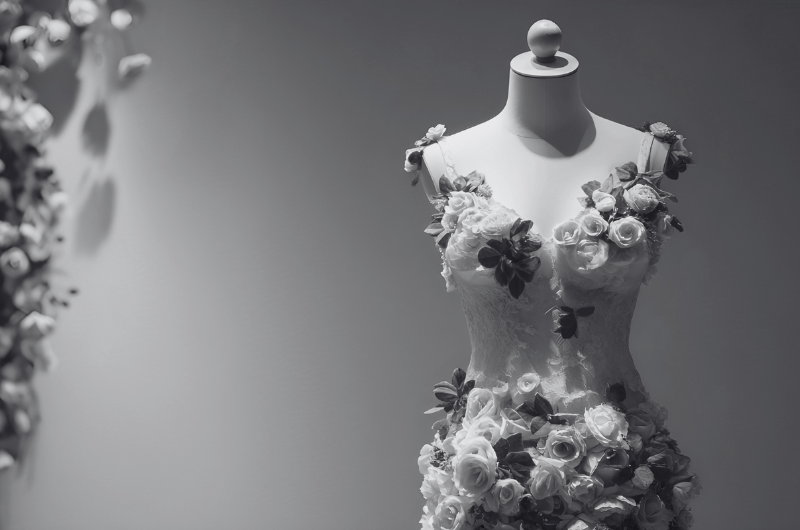
Part of the “Dressed to Protect” series on IP for fashion designs.
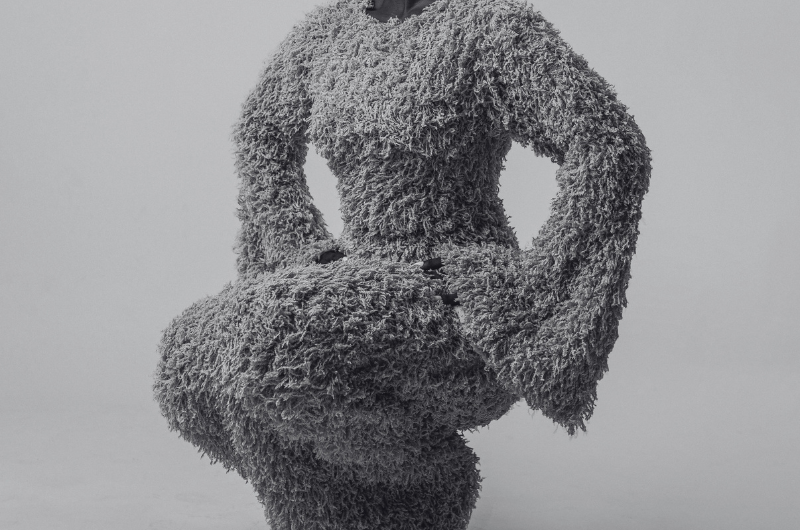
Last May, the Met gave us Superfine: Tailoring Black Style. It was the first menswear-centered Costume Institute show in over twenty years. A whole exhibition built on the proposition that Black men getting dressed has always been a political and aesthetic act.
(We saw the pieces. We even saw Andre 3000.)
The show ran eight weeks longer than any previous Costume Institute exhibition. They were not playing!
This year’s Met dress code was Fashion is Art. Max Hollien, the Met’s director, said he hoped we all “agree that fashion is art.” The accompanying exhibition, Costume Art, opened on May 10 and is scheduled to run through January 10, 2027. About 200 garments are paired with about 200 paintings, sculptures, and objects from across the Met’s collection.
The Met says fashion is art. The Copyright Act, the federal law that determines what gets protected and what doesn’t, has said something very different since 1976. And it hasn’t changed.
Fashion = Clothing… But Art?
The Copyright Act protects “original works of authorship.” Paintings. Sculptures. Music. Literature. But clothing? A different category entirely. The Act classifies clothing as a “useful article” and defines it as something with “an intrinsic utilitarian function that is not merely to portray the appearance of the article or to convey information.”
In English: the dress covers your body. That is its job. The fact that it might also be gorgeous, conceptual, or worthy of the Met doesn’t change its primary purpose or day job.
Designers can protect the design elements of a useful article, but only to the extent those elements can be identified separately from and exist independently of the garment’s utility.
This is the separability doctrine. It is the test the Supreme Court spent 2017 trying to clarify in a case many in fashion didn’t see coming.
Star Athletica (aka, “the Cheerleading Case”)
Star Athletica, L.L.C. v. Varsity Brands, Inc. is the case fashion lawyers cite, but most designers have never heard of. The fight was over cheerleading uniforms. Varsity Brands designed uniforms featuring chevrons, stripes, and color blocks. Start Athletica copied them. Varsity sued for copyright infringement of the surface designs.
Justice Thomas (who finally woke up from his years-long nap), writing for a 6-2 majority, provided the test. A design feature on a useful article is eligible for copyright protection if (1) you can perceive the feature as a two- or three-dimensional work of art separate from the useful article, and (2) the feature would qualify as a protectable pictorial, graphic, or sculptural work either on its own or in some medium.
Non-legalese: imagine the design lifted off the dress and printed on a canvas. Could that canvas hang in a gallery? If so, the design is protectable. If not, you are out of luck.
So the chevrons and stripes on the uniforms? Protectable as 2D graphic works. But the cut of the dress, the fit, the drape, the engineering of how that fabric falls on a body, the thing most designers spend their entire lives perfecting? It’s still a useful article. It’s still unprotected. And it’s still open to copying.
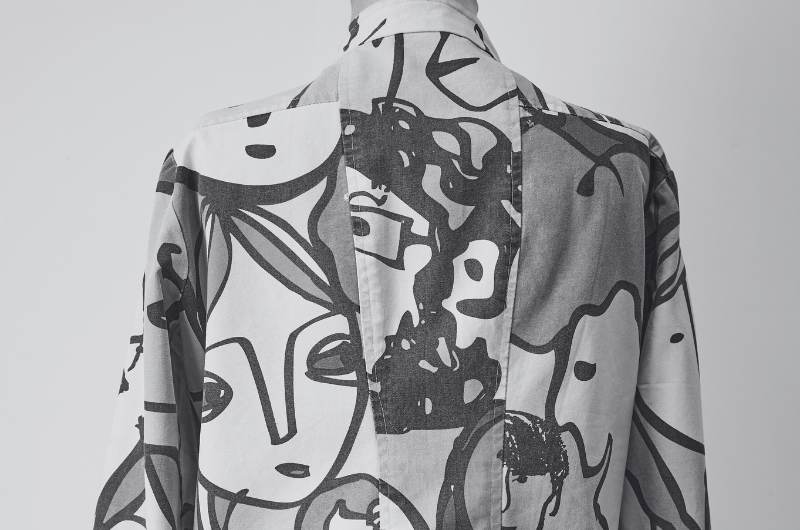
VARA Was Not Written For This
Since the Met is bringing fashion into the “art” conversation, someone is going to ask about moral rights or the Visual Artists Rights Act. VARA gives certain visual artists moral rights of attribution and integrity over their work. So it’s the law that should protect a couture piece presented as art, right?
It’s. Not.
VARA applies to “works of visual art,” and the statute defines the term narrowly. Paintings, drawings, prints, and sculptures. Still photographers produced for exhibition, in limited editions of 200 or fewer, signed and numbered. The statute expressly excludes “any merchandise item or advertising, promotional, descriptive, covering, or packaging material or container,” along with “any portion or part of any item” in those categories.
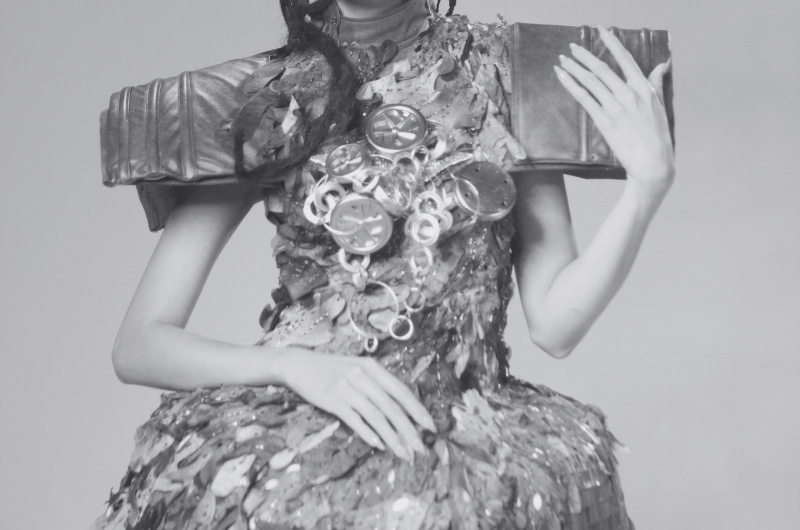
Even a couture piece, one of a kind, signed by the designer, and worn by exactly one person on one carpet, almost certainly does not qualify. VARA was enacted to protect works such as murals in lobbies or on the sides of buildings. It was not enacted for a Schiaparelli lion head, however iconic it may be.
So What Actually Protects the Work?
The Met can curate fashion as art. Critics can write about fashion as art. Buyers can collect fashion as art. None of that changes what the Copyright Act will recognize when someone copies your work. You still have to find a way to enforce it.
For designers, the practical move is to stop thinking of a garment as one thing and start thinking of it in layers.
The graphic print on the silk? Likely protectable as a 2D work. File a copyright application.
The embroidered pattern across the bodice? Possibly protectable, depending on whether it can stand on its own.
The cut, the silhouette, the construction? Not protected by copyright. Look to design patents (but move fast because you only have one year from public disclosure) or trade dress (the look must function as a source identifier in the marketplace, and that takes time to build).
The name on the label? Trademark. Different doctrine, but equally important.
Protecting the full look? A combination of all of the above, plus careful documentation of what you created (and even contracts that keep what you own yours).
Or… Just Ask New Orleans
There is another path. The people who figured it out are not in Paris or Milan. They are at home, in New Orleans.
For over a decade, the Black Masking Indians of New Orleans (some know them as Mardi Gras Indians) have been registering their hand-sewn, beaded, and featured suits with the U.S. Copyright Office, not as costumes or garments, but as sculptural works of art. The Yellow Pocahontas, the Creole Wild West, and other tribes have done it. They worked with Tulane Law School to identify the loophole in the useful article doctrine.
So how did they get it through the Copyright Office? Because a Mardi Gras Indian suit is not worn as clothing. It is worn over clothing. The suit itself (canvas, glass beads, rhinestones, plumes, sometimes 150 pounds of it, sometimes a full year in the making) has no utility. It is a sculpture that happens to be on a body.
(I’m going to write a separate post on this because it’s worth its own post.)
One More Thing…
The Met exhibition runs through January. Just don’t expect the law to catch up by then. The Met can hang a dress, but it cannot stop someone from copying it. But YOU can take steps to protect your design as much as US law allows. Use the available IP regimes to protect them, along with contracts to fill in the gaps.
Got it? Good. Now, let’s get to work!