
Forty-Five Thousand Dollars
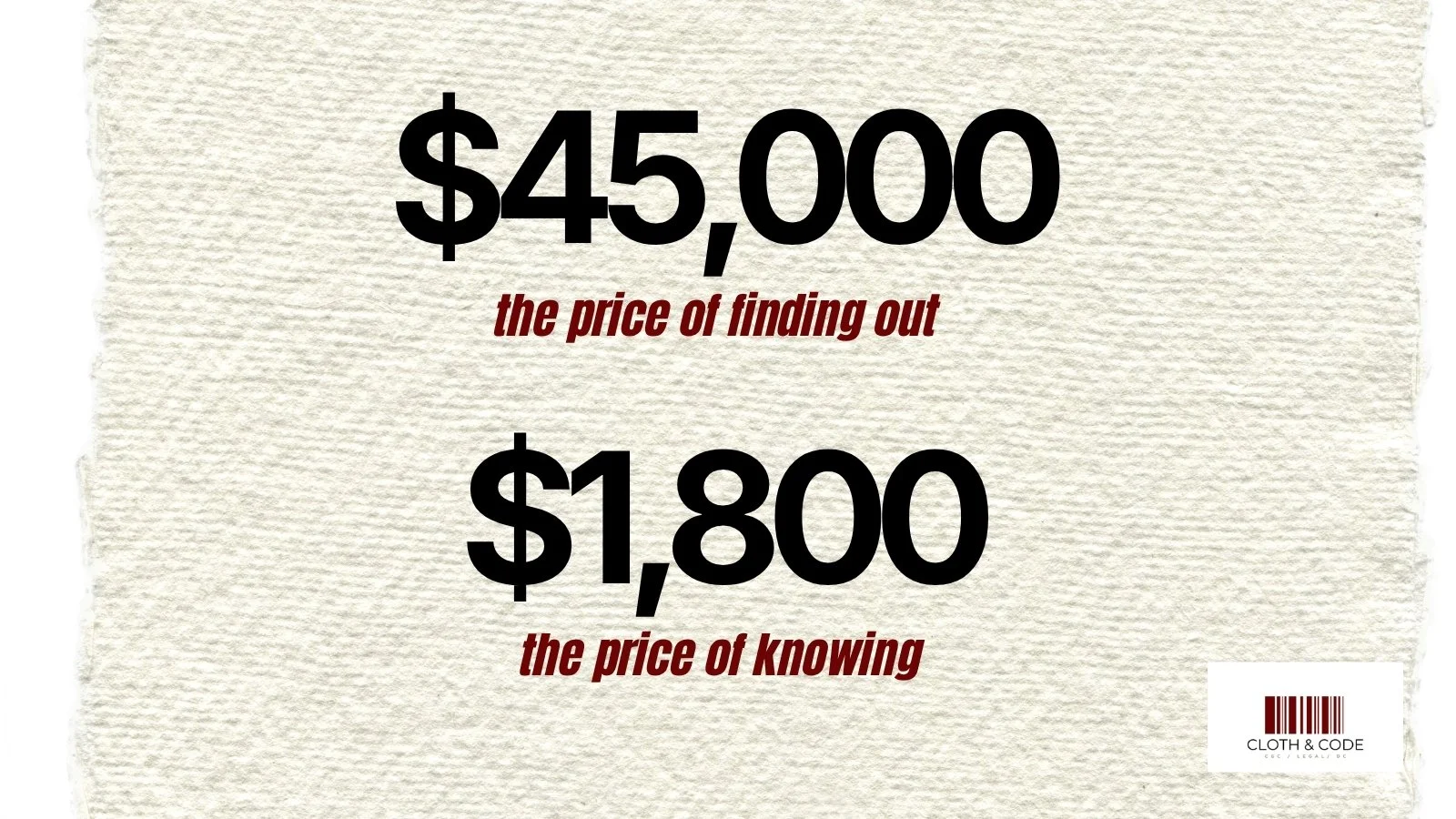
Two brothers in Charlotte, North Carolina, were days away from selling founding memberships for their new fitness studio when they discovered that a Pilates studio near Los Angeles, California, had a federal trademark for a name nearly identical to theirs in the same category. As a result, they had to change the name of their studio. This change cost them $45,000 for new merchandise, graphic design work, replacement materials, and legal fees. One of the brothers remarked, "We thought we had done our due diligence."
Each time I think about that sentence, it hits the same way. They performed their due diligence, according to the definition most business owners use. Their definition of “due diligence” is the problem.
Three businesses, one gap
An August 28, 2026 Axios Charlotte [link] article discussed three businesses that recently changed their names.
1. The fitness studio mentioned above was originally going with “Drench.” It rebranded as Overflo after receiving a letter from “Drenched.”
2. A listening lounge, initially named B-Side Sound Bar, was forced to change its name to Deep Cuts HiFi after receiving a cease-and-desist letter from a hospitality group that owns the B-Side name, just one day before its grand opening. The owner said losing the original signage and video content was minor compared to the marketing momentum they lost when they promoted under the old name.
3. The owner of The Accidental Baker, a gluten-free bakery, did a search in the North Carolina Secretary of State database before forming his LLC in 2024. He later discovered that another baker in North Carolina had been using the same name since 2018. He is now rebranding to Panetteria Senza and has already submitted a federal application for the new name.
None of these businesses had federal registrations for their original names, a detail Axios mentioned near the end of the article. (In my opinion, that should have been at the beginning.)
What a State Search Checks
I want to focus on the bakery owner's search because it represents a common mistake I often see. A state business database, such as one found on a secretary of state’s site, answers one specific question: Is this exact entity name available for an LLC or corporation in this state? That’s all it does. It does not check the federal trademark register, nor does it look into other states. It also doesn't consider a coffee shop two counties away that has used the name on its storefront since 2018 and didn’t file any official paperwork. Furthermore, it does not determine whether a name that isn’t identical to yours is similar enough to create potential issues, which is the primary concern of trademark law.
This confusion is understandable. State filings feel official; they require a fee and give you a document that shows the name. As a result, many people mistakenly treat this as official clearance. However, an LLC registration only reserves the entity name for state administrative purposes. It does not grant you the right to prevent anyone else from using a similar name as a brand, nor does it protect you if someone with prior rights raises an objection.
Names do not have to match
The second misconception in this story involves the fitness studio's experience. "Drench" and "Drenched" are not the same word, even though they are similar. This similarity led a creative agency working for the Los Angeles studio to mistakenly include the Charlotte studio's branding in their presentation. (This was how the LA studio discovered the Charlotte studio.) Trademark law aims to prevent this type of confusion.
The test for conflict focuses on the likelihood of confusion, not just on identical names. Similar names for comparable services, marketed to similar customers through the same channels, can lead to conflicts even if the spelling is different. You will overlook many potential issues that could affect you if you conduct a search only for your exact name.
A Math Problem
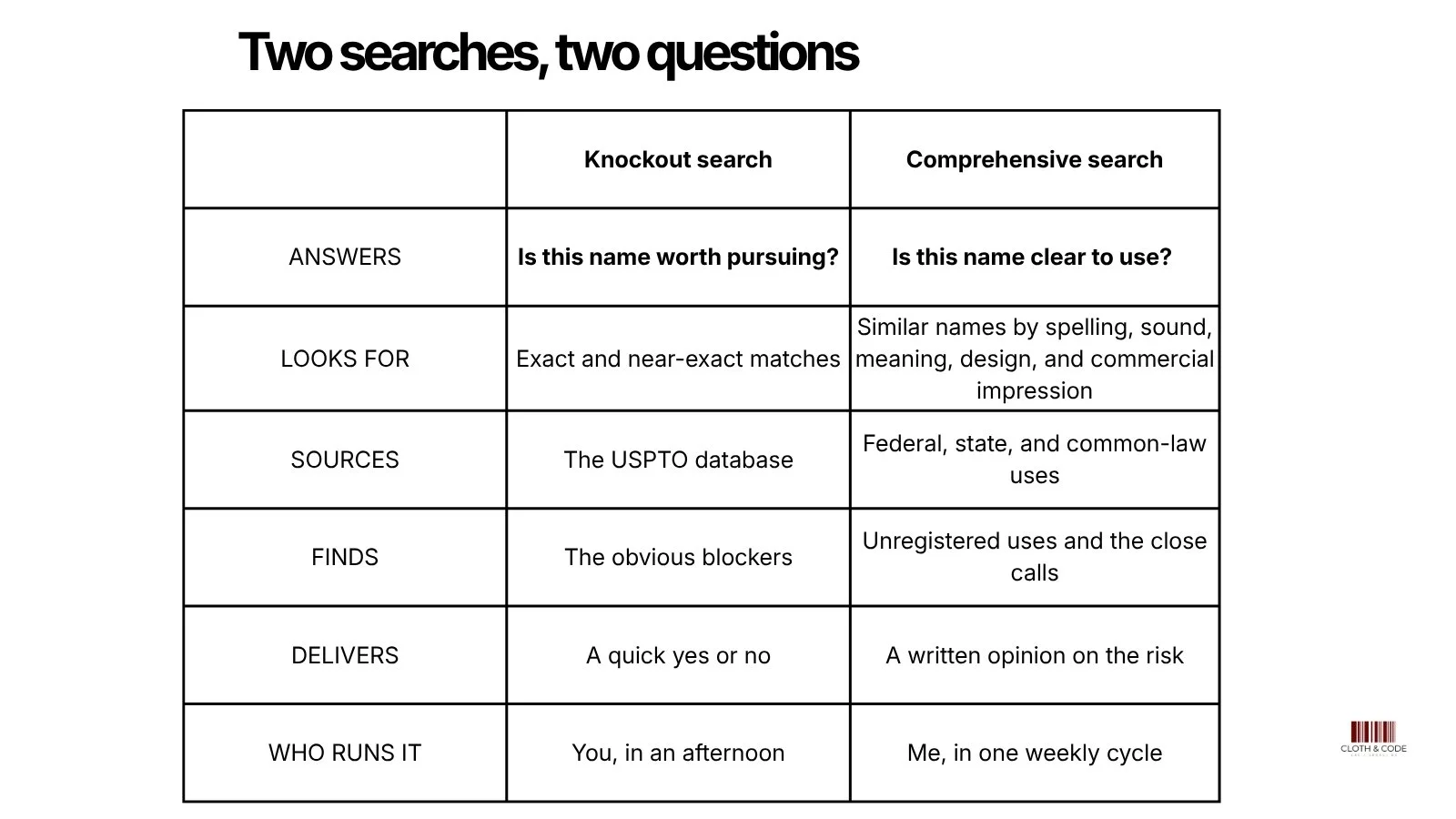
The attorney quoted in the article estimated that hiring counsel for a trademark matter could cost between $1,000 and $5,000. My Trademark Clearance Opinion falls within that range at a flat fee of $1,800. This includes a comprehensive search covering federal, state, and common-law uses, a written opinion on any risks, and a consultation to discuss the findings. You do not need to register anything to purchase this service. If I clear the name and you decide to apply for federal trademark registration within two weeks, that opinion will count as the first portion of the registration package, and the remaining cost will be $1,200.
I was a CPA (still am!) before I became a lawyer. In this case, spending $1,800 to avoid a potential $45,000 loss is not a matter of judgment; it’s a simple subtraction problem. The result is $43,200, and it ensures your grand opening occurs on the date you originally planned.
I often say "no" more frequently than people expect. This year, for instance, there have been at least three occasions where the search let me know that the name my client wanted wasn’t going to work. I advised my clients to stop before they announced the name or continued to invest money in it. Each of them chose a new name for significantly less than $45,000. That’s the nature of my job: not just to file applications, but to help clients make informed decisions.
What lessons to take from those Charlotte businesses
Three important points to consider, in order:
First, if you haven't launched your brand yet, conduct a trademark search before making any announcements. The clearance session is designed for situations like the one the Charlotte studio encountered, and it can be expedited if your launch date is approaching.
Second, if you have already launched without a trademark search, don’t wait for a refusal from the trademark office or a letter from another business. Take inspiration from the bakery owner who identified the issue himself, chose a clear new name, and filed for it before receiving any official notice. Proactive rebranding costs significantly less than being forced to rebrand later because of someone else's claims.
Third, if you have already received a trademark infringement letter, then that is a separate matter. In this case, avoid changing your name immediately; some of these letters can be overly broad. Talk to an attorney ASAP.
Everything else you build can be moved, insured, or replaced. However, your name is the one thing a stranger in another state can claim before you even open your doors. It’s also the first thing a customer will notice and the last thing you’ll want to change. Invest the $1,800 wisely, keeping this in mind.
The cost for a Trademark Clearance Opinion is $1,800. The opinion will be delivered the Monday following a Wednesday engagement, with an option for a rush service available within three business days. For more information and details about the intake process, please visit Trademark Clearance Opinion [link]. If you're still considering names, take a look at "Name It to Keep It" [link], a naming and rebranding workbook available on Selvedge [link]. It could serve as a helpful starting point.